
This is Biogas program for Vietnamese farmers sponsor by Vietnam and Dutch Governments
Saturday, 23 October 2010

Wednesday, 20 October 2010

A Brief Study into Rural Communities
This is the video study that Tom and i did for the group work. We traveled to various rural areas and filmed the centre's aswell as documented one minute of traffic to give an idea of density, space, movement etc.
(edited by unit2fc 23/10/2010)
(edited by unit2fc 23/10/2010)
Tuesday, 19 October 2010

The Decarbonization of Chicago Innovation Conference 2010
(This video from Alan)
Adrian Smith + Gordon Gill Architecture's Robert Forest, AIA, and PositivEnergy Practice's Roger E. Frechette present the new, holistic planning approach they have developed to reduce to carbon emissions in dense urban cores.
The New Yorker's David Owen
Innovation 2010 Keynote Address
David Owen, New Yorker writer and author of "Green Metropolis" among other books, discusses sustainability and cities at this year's Innovation Conference.
Adrian Smith + Gordon Gill Architecture's Robert Forest, AIA, and PositivEnergy Practice's Roger E. Frechette present the new, holistic planning approach they have developed to reduce to carbon emissions in dense urban cores.
The New Yorker's David Owen
Innovation 2010 Keynote Address
David Owen, New Yorker writer and author of "Green Metropolis" among other books, discusses sustainability and cities at this year's Innovation Conference.
Monday, 18 October 2010
Abstracting urban space?
Re-interpreting built form and urban & natural space through abstraction. The work of Michael Light and David Maisel (especially his Oblivion portfolio) is particularly interesting. Could this allow us as architects to envisage new and alternate ways of planning future cities?
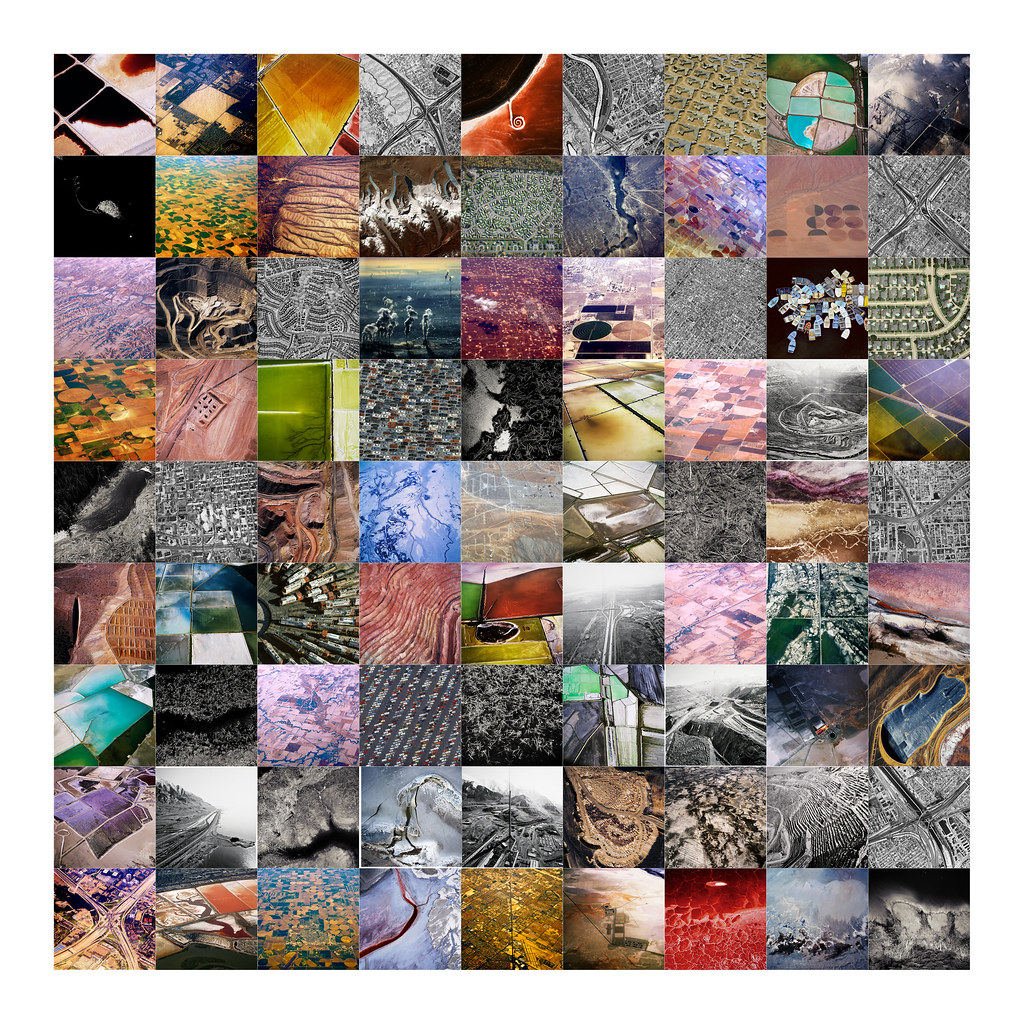
Image credits: Alex MacLean, Philip Shane, Michael Light & David Maisel.


Saturday, 16 October 2010
Amsterdam


The model of the city could be easily any other cities in the world such as London, New York, Sydney or even Kuala Lumpur however the model is a representation of Amsterdam, having the voids filled up with water.
I chose Amsterdam because it has the historical parts and yet it has one of the most modern architectures merging together. The future city will very much have to come in terms with adapting itself into the city and possibly siting next to a historical site. Moreover, the city being vibrant caters for both old and new and has a very mixed character.
Amsterdam isn't the only city which has this balance. Most of the other cities in Holland are similar to this as well. These cities have already gone through the process of rejuvenation and has reinvented itself as a city both modern yet historical. On one street you have the Anne Frank's house and the museum attached to it has a modern building inserted next to it. This city can teach us on how we can tread carefully and create a balance between the old and new.
Also attached is a tilt-shift video of IAM Amsterdam. A video project by Nike for advertising purposes but the concept of tilt-shift is to focus the eye into certain points which our eye would otherwise, not observed thus creating a new way to look at cities. This will be carried on to our site visit to Glasgow next week, with luck it will be just as successful.
Compact City


The origamic architecture (pop up) was to show the idea of compact cities in (usually) Asian cities. Compact city was a type of urban design theory based on the reaction towards urban sprawl.
Urban sprawl's central idea is based on suburbs that are located at the fringe of cities and the cost per area are generally higher and due to the distance out of the city it also means that most people would travel into the cities for work or leisure by car which means increase pollution.
Compact cities on the other hand emphasizes on transit-oriented development with transportation nodes located every 200-400m (bus,train or tram stops). However, most compact city means that buildings are build higher rather than horizontally.
UN has a 'compact city program' which uses the Melbourne model. Apart from it being an urban design strategy, it is also a strategy for better social,economic and politics for the people. This is mainly based on the comparison to an urban sprawl's effects. Most development outside of cities are generally cheaper, which attracts lower-middle class families therefore the difference in social order between those in and out of city areas are higher. Opportunities then, become more scarce for those who live out of the city - thus creating influx into cities for work or social reasons.
The 2 origamic architecture with left being Singapore and right, Melbourne shows a difference between the density and planning. Although Singapore is a compact city due to shortage of land, my personal experience being in Singapore is not as enjoyable as being in Melbourne. Singapore's planning has made the city somewhat sterile - as the CBD (central business district) being the only area which is lively and that means several rows of streets host work+play and during festivities, Singapore's underground walkways require 'traffic-controllers' which are akin to having traffic police in cars; but for human. This experience can be somewhat claustrophobic and also unpleasant.
Melbourne is spread out and consists of streets with more variety and mix uses - which I have personally found to agree with Kevin Lynch's 'Image of the city' in which he mentions about the the 7 key elements of good city. Melbourne seems then, appropriate to be a world city model for 'compact cities'.

Friday, 15 October 2010

Thursday, 14 October 2010
Wednesday, 13 October 2010

Jan Gehl
Aside from his built work in Copenhagen etc. Gehl architects have carried out many studies of life in the city over many cities across the world. His books, particularly his Public spaces- Public life series mat be of particular value in this unit, as they document the successes and shortcomings of life in the city.
A list of these books can be found here:
http://www.gehlarchitects.com/#/159794/

A list of these books can be found here:
http://www.gehlarchitects.com/#/159794/

This may also be of interest, placemaking for communities, based on Gehl's work:
Ha Noi the Ascending Dragon

This is a story about Hanoi, a story of a city start from scratch to become a capital of 90 million people country.
Ha Noi is located in the right bank of Red river, the city located 1,760km (1090 mil) north of Ho Chi Minh city (known as Saigon) the largest city of Viet Nam.
10th October 2010 was officially mask 1000 years of establishment of city.
Ha Noi has been inhabited since at least 3000 BC. One of the first known permanent settlements is Co Loa citadel found around 200 BC.
In 1010 Ly Thai To the first ruler of the Ly Dynasty moved the capital of Dai Viet (Great Viet, then the name of Vietnam) to the site of Dai La citadel . Claiming to have seen a dragon ascending to Red river, he renamed it Thang Long (Ascending Dragon), a name still use poetically to this day.
After 1000 of struggle history the city remaining the capital of Viet Nam .
Today, Hanoi 's total area increased to 334,470 hectares divided into 29 subdivisions, a metropolitan area covering Hanoi and 6 surrounding provinces under planning will have area of 13,436 square kilometers with a population of 15 million by 2020.
After Vietnam's War the city growing spontaneously.Therefore, I love to do "City extension" topic or "City regeneration" topic,which will be very useful for me.
My career in Vietnam in the future will be facing these things, but 2 years for master program, doing "New city planning" will be very great opportunity, because we can foresee the future of 2050 with current conditions of technology, knowledge and social...
Ly Thai To, the King who saw the potential of the land which was good for transportation, agriculture, defend... Ascending Dragon was the image carrying his dream of the land would grow.
For me, personally I am able to dream of the future city which I dream to live, I believe you can do that also.
Our Unit2 has people from many places from over the world, we are loving our own home towns and culture, doing something in common will be very good to learn from mistakes, doing "new city planning " is also good to learn for your own loved places extension or regeneration in the future.
You still have time to change your vote !!!
Subscribe to:
Posts (Atom)